
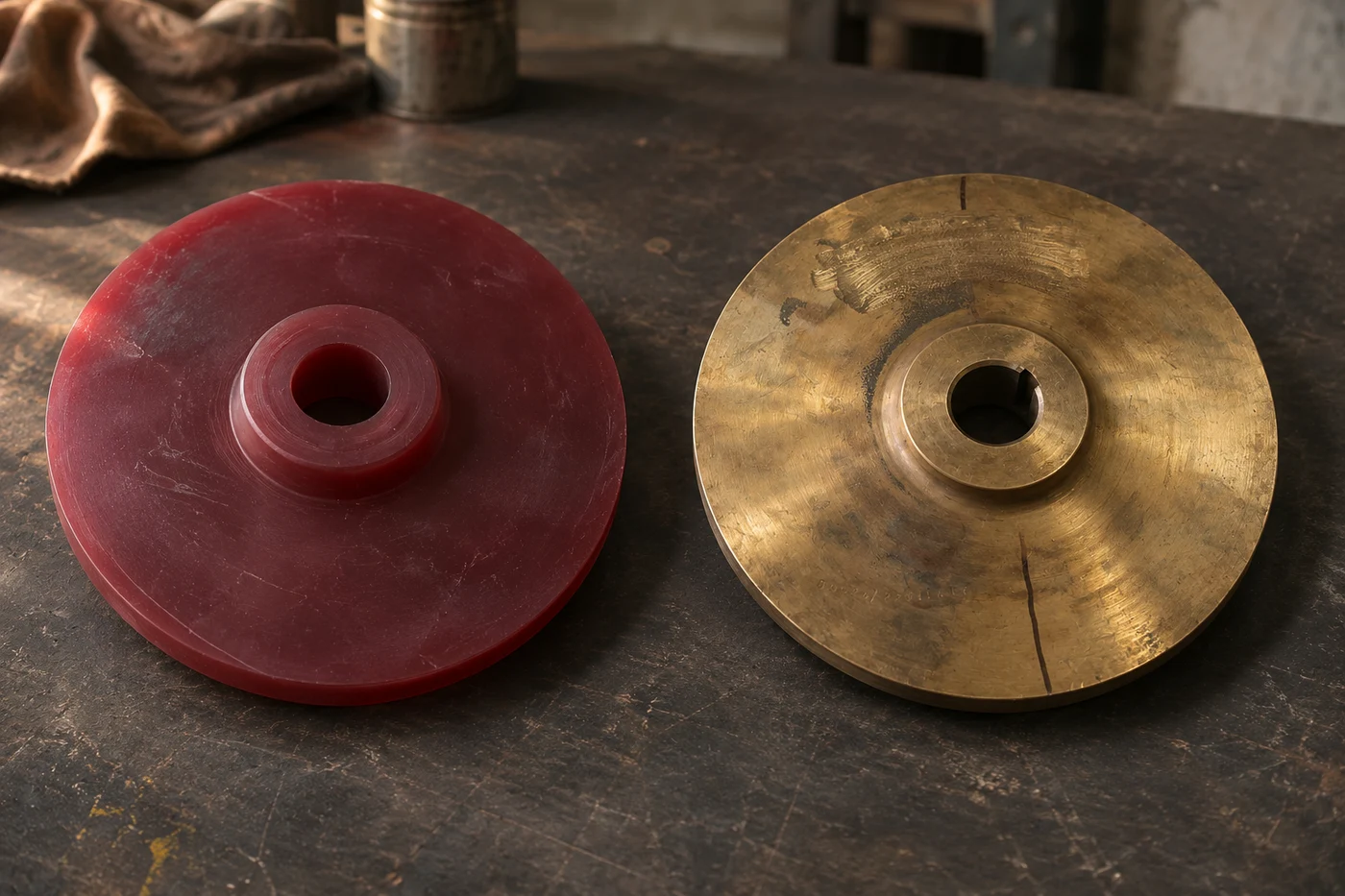
A wax die can survive a supplier change while the dimensions of the resulting impeller change. The missing piece is the manufacturing process between the tool and the delivered part.
That is the central issue in investment casting tooling transfer. A die that worked at the old source is a useful starting asset. To decide whether to reuse it, examine what it produces in the proposed route, as well as the condition of the tool itself.
First separate the die, the pattern and the casting
The metal wax-pattern die produces a wax form. The ceramic mold and metal-casting stages come later. These objects have related geometry, but measurements taken from them answer different questions.
Oak Ridge National Laboratory's dimensional-control research explains the linked dimensional changes in the wax, ceramic mold and cast alloy. Its lesson here is the relationship between the stages. The report's experimental results are not a shrinkage allowance to copy onto a bronze impeller drawing.
Think of an impeller's as-cast outside diameter and a hub surface that will later be machined. The casting-stage requirements for those features are not necessarily the finished-part dimensions. Comparing every wax or casting measurement directly with the finished drawing would mix the stages before the tooling decision has even begun.
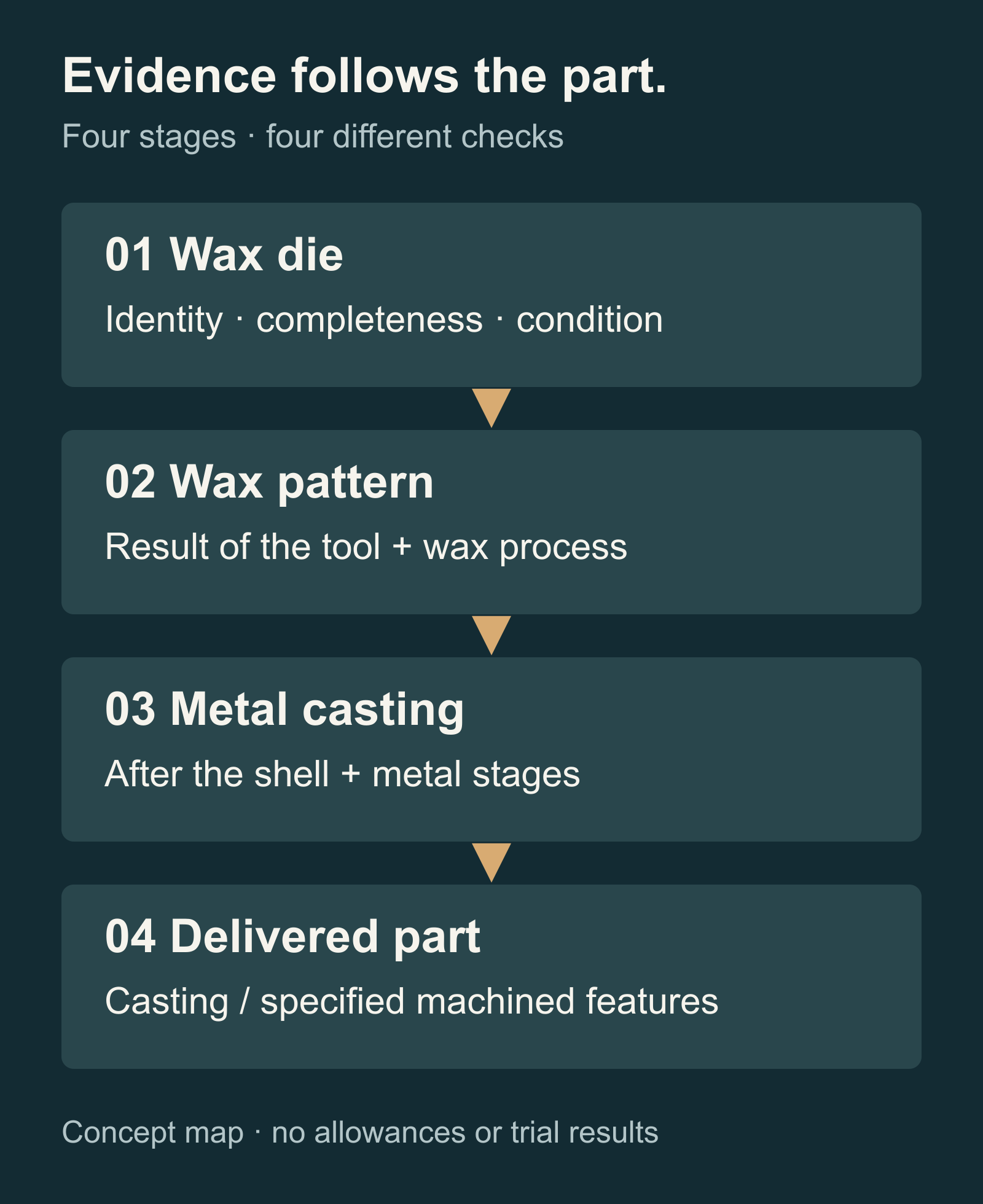
Original stage map. It shows evidence boundaries, not tooling allowances or a Zhiren trial result.
Why the same cavity can produce a different result
The cavity is one input to wax-pattern production. Injection conditions and die temperature also affect the pattern. The Investment Casting Institute's wax-pattern defect atlas, pages 18–19, identifies these variables alongside die mismatch and wax-related causes of dimensional variation.
This creates two different checks. Inspecting the die establishes its physical condition and identity. Examining patterns made with it establishes the result of that tool-and-process combination. A clean die photograph cannot substitute for the second check.
The difference continues into metal. In its 2024 technical conference proceedings, ICI records transfer considerations including different waxes, shells and shrink factors. A separate discussion asks whether existing tooling is compatible with the receiving source's equipment. Neither observation means that every tool needs replacement; both explain why an old process cannot be assumed to move with the asset.
Make the reuse decision at the right checkpoint
There are three practical routes. Choose between them by the unresolved problem, rather than treating the age or purchase price of the die as the decision.
On a small screen, scroll the table sideways.
| Route | What needs to be established | What would not establish it |
|---|---|---|
| Reuse the existing die | The identified, complete asset works in the proposed route and produces the specified part | An acceptable impeller made by the previous source |
| Adapt the existing die | The proposed changes are defined and their effect is checked in the resulting part | A general statement that the die can be modified |
| Make replacement tooling | The new tool is connected to the current part definition and intended process | Recreating an old cavity without knowing which requirements it represented |
Keep this sequence visible in the transfer record. If wax patterns differ, establish the tool and process condition before accepting a tooling change as the answer. If the patterns meet their requirements but the casting does not, another cavity adjustment needs a reason tied to the later stage. If the casting is supplied for machining elsewhere, a finished-part result also depends on that next operation.
The point is to locate the evidence gap. Repeatedly machining attractive samples will not establish what the production casting route delivers.
Keep asset history beside the trial evidence
The useful transfer package connects the tool identifier, part revision, associated tooling items and condition record. Keep previous sample or production reports with that history, labeled for the route they actually represent.
Weir's Supplier Quality Manual illustrates the distinction: section 2.6 controls customer-owned tooling, while section 3.5 treats tooling transfer as a first-article trigger. Those are Weir's requirements. They demonstrate why custody of an asset and acceptance of the manufacturing result are separate matters.
For the wider source-change project, use the impeller supplier-transfer guide. When trial parts and records are available, the first-article report guide helps connect results to the specified features.
For a custom order through Zhiren's pump impeller casting page, start with the current part revision and photographs identifying the existing wax tooling. That gives the manufacturing enquiry a defined starting point without assuming that the old die is ready for production.