
A tensile result belongs to a physical specimen. Before applying it to a bronze impeller order, find where that specimen came from. A correct heat identity is one part of the answer; the sample's origin is another.
That distinction is easy to lose when a document is described only as a “material certificate.” The number can be genuine and correctly linked to the supplied metal while its sampling basis still needs to be understood.
Same heat does not mean the same section
Material cast into a test bar and material cast into an impeller do not necessarily experience the same solidification conditions. Section size and geometry matter to how the metal becomes the casting.
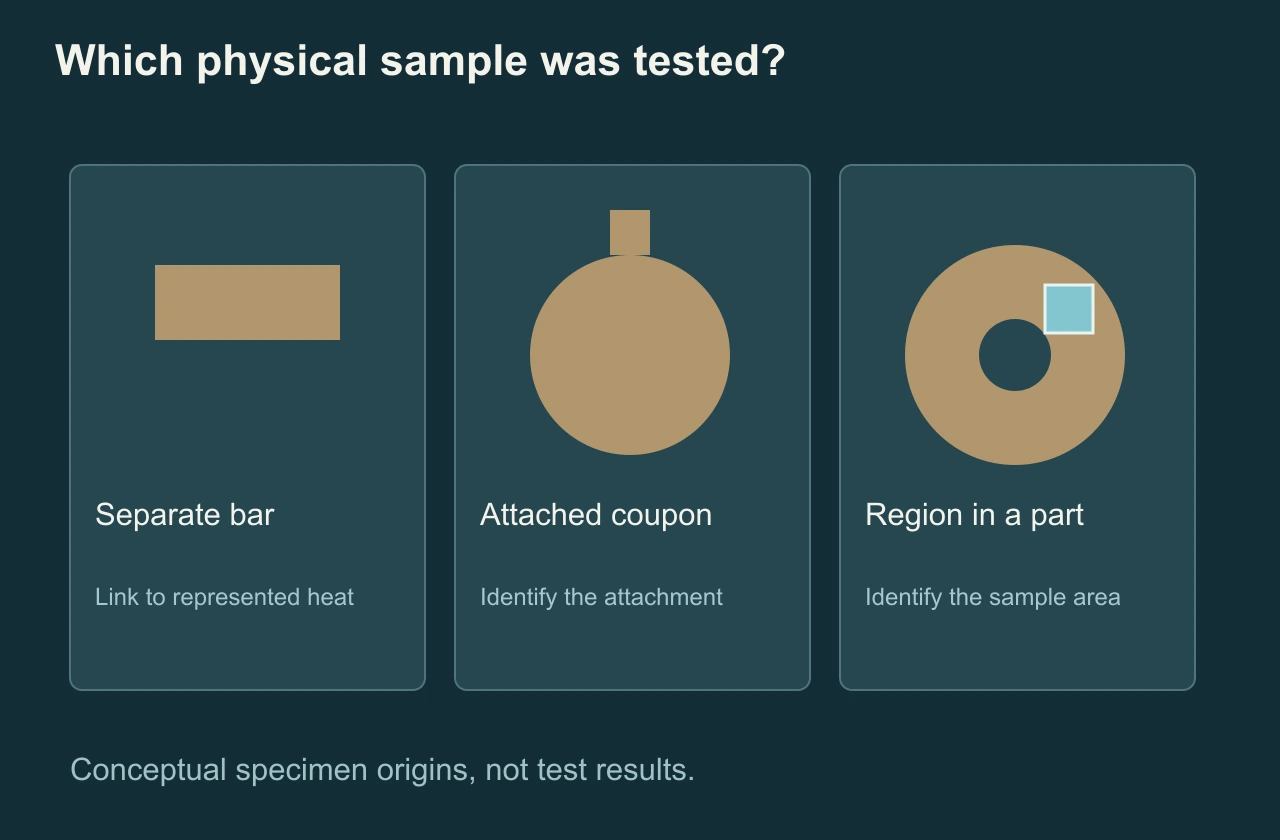
A separate bar has its own shape and surrounding mold. A thick hub and a thin vane have different section geometries even when they come from the same pour. Their common identity does not remove those physical differences. A tensile machine loads the prepared specimen; it does not load every region of the impeller through that specimen.
The public ASTM B208 significance statement makes this distinction for the routes in its scope: a bar can represent metal from the same heat without its mechanical properties being identical to those of the corresponding casting. Its named scope covers sand, permanent-mold, centrifugal and continuous casting; it is not a blanket sampling requirement for investment-cast impellers.
A separate bar is therefore not automatically invalid. Its result must be used for the representation and acceptance purpose actually specified, rather than expanded into a claim about every finished section.
Locate the casting test coupon before interpreting the result
The sample description should distinguish these physical situations:
On a small screen, scroll the table sideways.
| Sample basis | What needs to be identified |
|---|---|
| Separately cast bar | The represented material identity and the specified bar condition |
| Attached coupon or extension | Where it was attached and the sampling condition defined for it |
| Specimen from a sample casting | The component and the actual region from which it was removed |
An attached coupon is not automatically a direct test of a remote hub or vane. A specimen removed from one identified region is also not a test of all the unsampled regions. Keep the reported result attached to its actual physical origin.
Sample origin also matters when comparing published property data. The American Foundry Society's explanation of the CADS alloy database identifies section thickness, casting process and related production history as context accompanying the properties. A strength figure without its sampling and material condition leaves part of that comparison undefined.
Follow two links through the paperwork
Try an illustrative receiving review. The shipment and test record share the agreed heat identity. That closes the identity question only as far as the recorded mapping supports it. If the report omits the specimen origin, the buyer still cannot tell whether it was a separate bar or material removed from the component.
Now reverse the problem. A report clearly identifies a sample location, but the connection to the shipped material is absent. The sample description has not repaired that missing identity link.
These are different gaps. The impeller traceability guide follows material identity into the shipment. Here the additional question is which physical sample produced the result.
Put the sample decision before the finished shipment
If acceptance requires a specimen from a selected component region, account for that sample in the order before the finished parts are ready. A removed specimen, an extension and a separately cast bar leave different physical material available afterward.
Keep the evidence types separate too. A tensile result does not establish chemical composition without the relevant analysis, and neither replaces a specified examination for discontinuities. The penetrant-versus-radiographic guide covers the different questions those examinations address.
When a new order through Zhiren's pump impeller casting page includes mechanical-test acceptance, identify the required specimen basis and any relevant component location with the part definition. That makes the sampling requirement explicit without asking the phrase “test certificate” to prove the whole impeller.