
A shaft-hole diameter tells you what can pass through a butterfly disc. It does not, by itself, tell you how the shaft drives the disc.
That distinction matters when ordering a bronze butterfly valve disc. Two parts can have the same outer diameter and a matching bore measurement yet require different connection features. A pinned connection and a keyed or splined connection are different component definitions, not alternative names for the same hole.
Separate the bore from the drive features
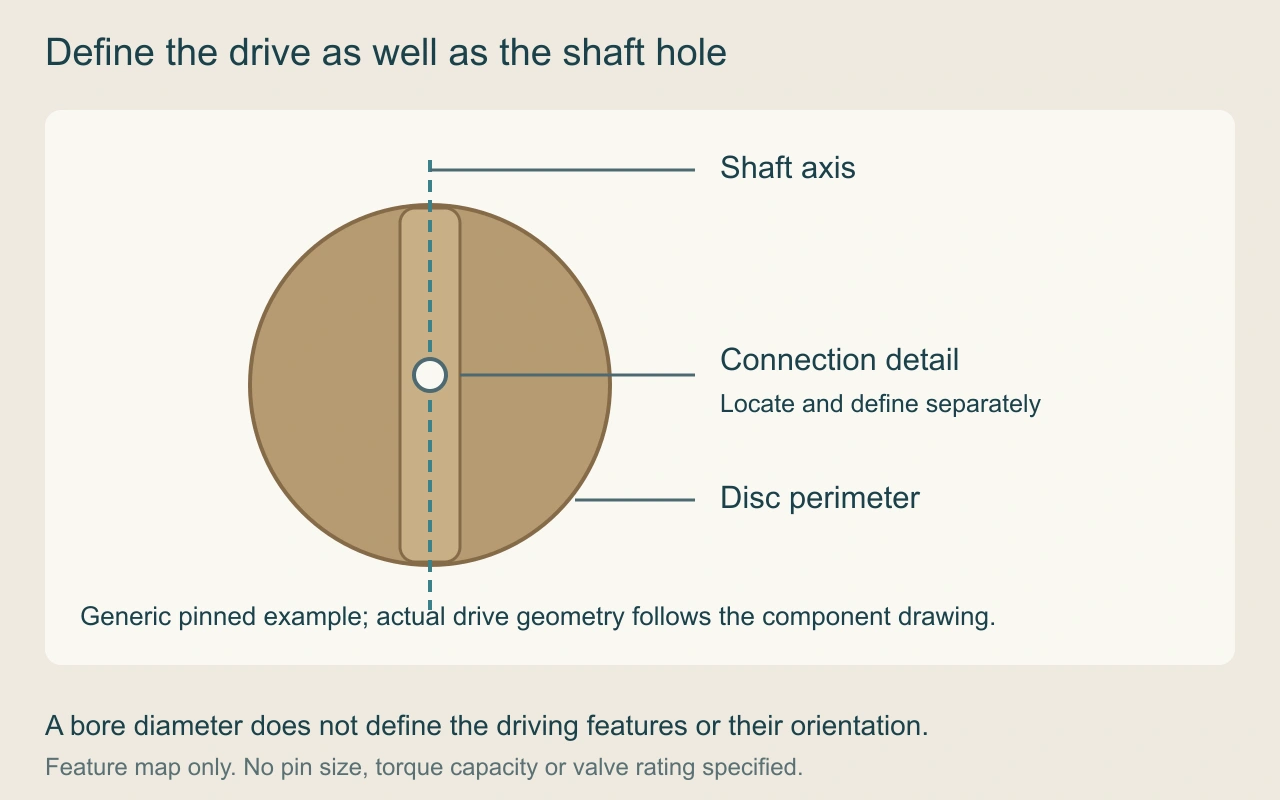
The bore receives the stem or shaft. The connection must also establish how the stem and disc move together. The feature carrying that connection may involve a pin interface, a keyway or a shaped profile, as specified by the actual valve design.
Bray's resilient-seated butterfly-valve manual illustrates the distinction within named product variants. Its taper-pin Series 35/36 parts list separates the disc, stem and pins. A different connection variant discusses splined or double-keyed interfaces. These examples show why a component enquiry needs the actual connection detail; they do not establish one universal arrangement for every butterfly valve.
For a pinned design, the shaft-hole measurement leaves the pin features undefined. For a keyed or splined design, a diameter alone leaves the driving profile undefined. Those omissions remain even when the disc's outside silhouette looks correct.
Locate the connection relative to the disc
A connection detail also has an orientation. An isolated close-up of a hole does not show its relationship to the disc face or perimeter.
Imagine two otherwise identical component drawings. Both show the same shaft bore, but the cross-feature is located differently along that bore. The same stem measurement cannot establish that both details will meet the intended mating feature. A section or a second view is needed to show that relationship.
Keep the local connection geometry visible alongside the overall disc definition. Identify the shaft axis and the references used to locate the driving features. This is a component-definition task; an actuator's open/closed indication does not replace the geometry of the disc being manufactured.
Specify the state being purchased
A casting blank may leave stock where the finished disc has a machined bore and connection features. A machined-disc enquiry needs to identify which of those features belong in the requested delivery. Otherwise, “disc with shaft hole” can conceal a different division of work between the casting supplier and the next machining operation.
For a custom enquiry, send the disc drawing with its local stem-connection detail and identify blank or machined delivery. Use the butterfly valve disc page as the product route. The connection detail, rather than a bore diameter alone, gives that enquiry a defined component to discuss.