COMPONENT REQUIREMENTS

Metal valve seat ring

Define the geometry, material, delivery condition and acceptance criteria for the selected application. Manufacturing scope requires review of the approved drawing and operating requirements.

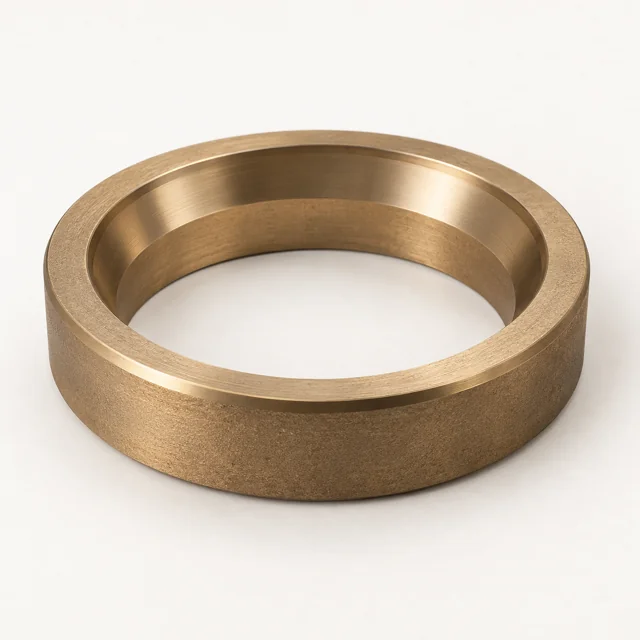
Illustrative Metal valve seat ring
Generated component illustration. It is not a Zhiren product photograph or an engineering drawing; final geometry follows the controlled drawing.
Illustrative Metal valve seat ring
Conceptual part illustration
COMPONENT GUIDE

Metal valve seat ring

Fixed seat of a specified metal-seated valve

Provides the drawing-defined stationary metal sealing interface.

Manufacturing & delivery form
Ring blank or suitable bar/tube stock followed by machining.

A metal ring is not a substitute for PTFE or elastomer seating without an approved design change.

Material candidates

UNS C95400 Aluminium bronze

A candidate for specified wear, guidance or structural components.

Candidate for drawing review only. Confirm load, counterface, lubrication and condition; it is distinct from C95800. Zhiren availability is unconfirmed.

UNS C95800 Nickel aluminium bronze

A candidate for specified saline-water and wear components.

Candidate for drawing review only. Review water chemistry, flow, mating metals and casting condition; no corrosion or cavitation guarantee. Zhiren availability is unconfirmed.

UNS C90500 Tin bronze

A candidate for drawing-specified pump, valve and friction components.

Candidate for drawing review only. Confirm medium, loading, manufacturing condition and the governing standard. Zhiren availability is unconfirmed.

Confirm the drawing, actual duty, material standard and manufacturing condition. Material substitutions require customer approval, and supply scope is agreed after component review.

Component RFQ requirements

Seat geometry
Inside/outside diameters, seating angle, width and retention.
Sealing pair
Mating disc material, hardness, contact profile, finish and lapping allowance.
Valve duty
Medium, pressure, temperature, cycling and assembled-valve leakage criteria.
Material specification
Alloy grade, governing standard and revision, manufacturing condition and any restricted substances.
Order & acceptance
Approved drawing revision, quantity, blank or machined delivery, inspection criteria and required records.

Start with your drawing, specified alloy and quantity. Include the required delivery condition and acceptance records so the manufacturing and inspection scope can be reviewed.

Prepare a component enquiry
FURTHER GUIDANCE

Prepare the technical RFQ.

Alloy reference

Review tin-bronze grades.

Compare reference grades and composition in the alloy catalogue. Use the approved component specification to determine the required alloy and service suitability.

Explore the alloy reference