COMPONENT REQUIREMENTS

Liquid-cooling valve body

Define the geometry, material, delivery condition and acceptance criteria for the selected application. Manufacturing scope requires review of the approved drawing and operating requirements.

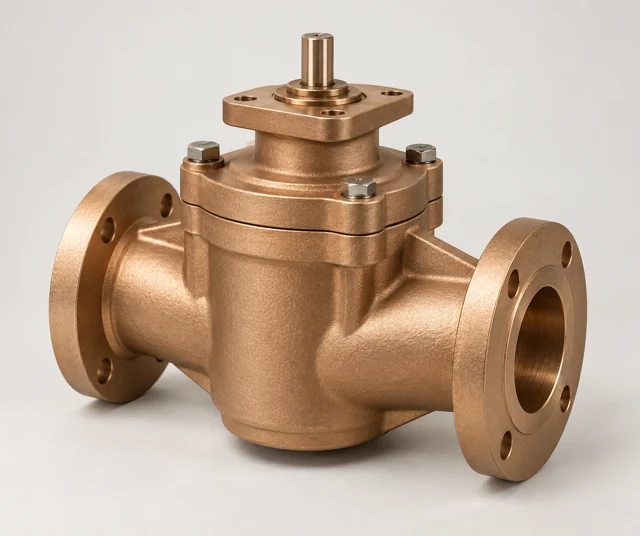
Illustrative Liquid-cooling valve body
Generated component illustration. It is not a Zhiren product photograph or an engineering drawing; final geometry follows the controlled drawing.
Illustrative Liquid-cooling valve body
Conceptual part illustration
COMPONENT GUIDE

Liquid-cooling valve body

Customer-approved regulating or isolation point on a facility-water or CDU circuit

A drawing-led assessment of a valve body, its wetted surfaces and manufacturing route.

Manufacturing & delivery form
Potential body casting with machining, cleaning and project-specific validation.

Low lead does not establish low ion release or liquid-cooling compatibility. Ordinary water-valve experience is not sufficient approval for a TCS material.

Material candidates

UNS C89833 Bismuth tin bronze

A low-lead alternative to consider where the customer approves the material and manufacturing route.

Development candidate only. Obtain written customer approval for the alloy and manufacturing route, then validate the actual coolant, complete wetted-material set, cleanliness and leakage requirements. This grade has no assumed approval for a technology cooling system.

UNS C90500 Tin bronze

A candidate for specified pump and valve components.

Development candidate only. Obtain written customer approval for the alloy and manufacturing route, then validate the actual coolant, complete wetted-material set, cleanliness and leakage requirements. This grade has no assumed approval for a technology cooling system.

Confirm the drawing, actual duty, material standard and manufacturing condition. Material substitutions require customer approval, and supply scope is agreed after component review.

Component RFQ requirements

Valve and loop definition
Provide valve function, flow direction, loop identity and OEM-approved drawing revision.
Material approval
List every wetted metal, coating and seal, coolant chemistry and the customer's allowable material/processing routes.
Seat and interfaces
Define seat datums, body/bonnet joint, connections, sealing surfaces and machining allowance.
Cleanliness and release
Specify particle, residue and ion-release criteria, cleaning verification and protective packaging.
Leakage and duty
Provide temperature/pressure, leak-test method and limits, sample approval and complete-valve test responsibility.
Deliverable
Define casting/alternative route, machining scope, quantity, traceability and permitted material or process changes.

Start with your drawing, specified alloy and quantity. Include the required delivery condition and acceptance records so the manufacturing and inspection scope can be reviewed.

Prepare a component enquiry
FURTHER GUIDANCE

Prepare the technical RFQ.

Alloy reference

Review tin-bronze grades.

Compare reference grades and composition in the alloy catalogue. Use the approved component specification to determine the required alloy and service suitability.

Explore the alloy reference