COMPONENT REQUIREMENTS

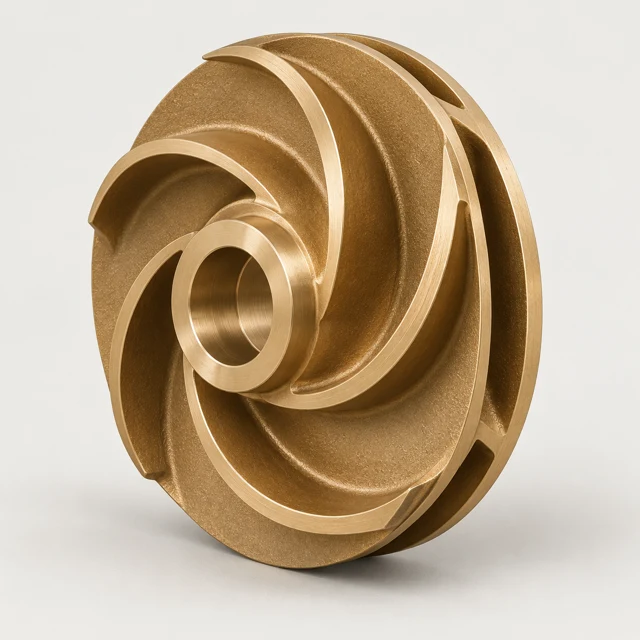
Fire pump impeller

Define the geometry, material, delivery condition and acceptance criteria for the selected application. Manufacturing scope requires review of the approved drawing and operating requirements.

Illustrative Fire pump impeller
Generated component illustration. It is not a Zhiren product photograph or an engineering drawing; final geometry follows the controlled drawing.
Illustrative Fire pump impeller
Conceptual part illustration
COMPONENT GUIDE

Fire pump impeller

Inside an OEM fire pump designed for a copper-alloy impeller

Forms the rotating hydraulic passage in the approved pump model.

Manufacturing & delivery form
Cast impeller with agreed machining and balancing responsibility.

An OEM pump example is not proof of a particular copper-alloy grade. Pump flow, head and product qualification remain complete-equipment responsibilities.

Material candidates

UNS C90500 Tin bronze

A candidate for specified pump and valve components.

Review the actual medium, mating materials and manufacturing condition. Material data do not establish component pressure, wear life or pump performance.

UNS C95800 Nickel aluminium bronze

A candidate for approved saline-water pump and wear-component designs.

Confirm actual water chemistry, mating alloy, required material condition and equipment approval; no automatic equivalence with CC333G or C95400.

Confirm the drawing, actual duty, material standard and manufacturing condition. Material substitutions require customer approval, and supply scope is agreed after component review.

Component RFQ requirements

Approved pump geometry
Provide model, impeller drawing revision, vanes/shrouds, diameter and rotation direction.
Shaft connection
Specify hub bore, keyway, retention, datums and finished fits.
Material and medium
Provide the approved alloy and water conditions; saline-water alternatives require explicit design approval.
Balance and inspection
Define balance criteria, responsible party, surface finish and casting-defect acceptance.
OEM verification
State sample approval, material/batch records, permitted design changes and assembled-pump verification requirements.

Start with your drawing, specified alloy and quantity. Include the required delivery condition and acceptance records so the manufacturing and inspection scope can be reviewed.

Prepare a component enquiry
FURTHER GUIDANCE

Prepare the technical RFQ.

Alloy reference

Review tin-bronze grades.

Compare reference grades and composition in the alloy catalogue. Use the approved component specification to determine the required alloy and service suitability.

Explore the alloy reference