COMPONENT REQUIREMENTS

Copper cold plate — adjacent component

Define the geometry, material, delivery condition and acceptance criteria for the selected application. Manufacturing scope requires review of the approved drawing and operating requirements.

Illustrative Copper cold plate — adjacent component
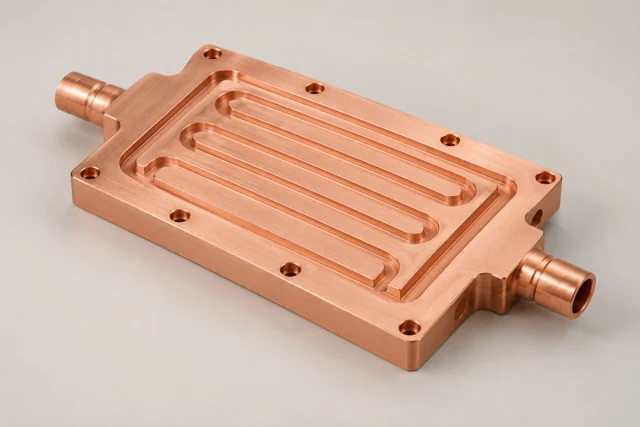
Generated component illustration. It is not a Zhiren product photograph or an engineering drawing; final geometry follows the controlled drawing.
Illustrative Copper cold plate — adjacent component
Conceptual part illustration
COMPONENT GUIDE

Copper cold plate — adjacent component

Heat-transfer interface at a server CPU/GPU or other specified source

Identifies the manufacturing and validation inputs for a copper cold plate as an adjacent technology.

Manufacturing & delivery form
Commonly involves machining or forming plate/block stock and joining; any casting proposal needs a separate development study.

This record does not claim established cold-plate, microchannel, brazing or thermal-design capability at Zhiren.

Material candidates

UNS C11000 Wrought copper

A reference for machined or formed copper cold-plate structures.

An adjacent manufacturing route, not a casting grade or confirmed Zhiren cold-plate capability. C10200 requires a separate customer specification.

Confirm the drawing, actual duty, material standard and manufacturing condition. Material substitutions require customer approval, and supply scope is agreed after component review.

Component RFQ requirements

Thermal design inputs
Provide heat-source/contact geometry and the OEM's required thermal resistance and pressure-drop criteria.
Channels and base
Define channel geometry, base thickness, mounting, flatness and surface requirements.
Material and joining
Specify wrought-copper grade, joining process, coating and accepted manufacturing routes; no automatic cast-grade substitution.
Coolant compatibility
Identify the coolant, full wetted-material list and corrosion/compatibility validation responsibilities.
Cleanliness and sealing
Define particles, residues, leak-test criteria, cleaning verification and protective packaging.
Feasibility boundary
Identify which design, machining, joining and performance tests need a qualified supplier before assessing a proposal.

Start with your drawing, specified alloy and quantity. Include the required delivery condition and acceptance records so the manufacturing and inspection scope can be reviewed.

Prepare a component enquiry
FURTHER GUIDANCE

Prepare the technical RFQ.

Drawing preparation

Define the delivery scope.

Provide the approved drawing or model, specified material and quantity. Identify the required casting, machining, surface treatment and final equipment validation, with responsibility assigned for each.

Prepare your enquiry