COMPONENT REQUIREMENTS

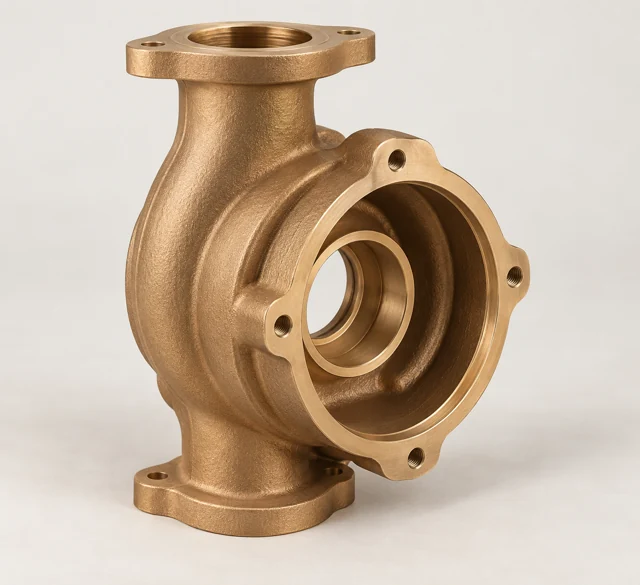
Circulator pump housing

Define the geometry, material, delivery condition and acceptance criteria for the selected application. Manufacturing scope requires review of the approved drawing and operating requirements.

Illustrative Circulator pump housing
Generated component illustration. It is not a Zhiren product photograph or an engineering drawing; final geometry follows the controlled drawing.
Illustrative Circulator pump housing
Conceptual part illustration
COMPONENT GUIDE

Circulator pump housing

Water side of a circulator designed for a copper-alloy housing

Encloses the pump flow passage and provides the pipe and seal interfaces.

Manufacturing & delivery form
Complex housing casting with agreed machining.

Confirm the pump model and body material. A bronze housing does not establish a bronze impeller, and many circulators use other housing materials.

Material candidates

UNS C83600 Leaded red brass

A candidate for specified cast valve bodies, covers and connection housings.

An application candidate, not a confirmed equipment bill of materials or available Zhiren grade. Do not default to potable-water use.

UNS C90500 Tin bronze

A candidate for specified pump and valve components.

Review the actual medium, mating materials and manufacturing condition. Material data do not establish component pressure, wear life or pump performance.

UNS C89833 Bismuth tin bronze

A low-lead alternative to consider where the customer approves the material and manufacturing route.

Low-lead chemistry alone does not establish low leaching, potable-water eligibility or complete-product compliance. Qualification belongs to the actual component and service.

Confirm the drawing, actual duty, material standard and manufacturing condition. Material substitutions require customer approval, and supply scope is agreed after component review.

Component RFQ requirements

Pump identity
Provide model, approved housing drawing, flow-passage geometry and interfaces to the rotating assembly.
Service category
Distinguish closed-loop water from domestic hot water; supply actual temperature, pressure and water chemistry.
Alloy approval
Specify material standard and condition; for potable service define the required component qualification and responsibility.
Seals and ports
Identify gasket seats, registers, connections, machining datums and critical wall sections.
Delivery acceptance
State machining scope, leak-test method, limits, batch traceability and any required cleanliness records.

Start with your drawing, specified alloy and quantity. Include the required delivery condition and acceptance records so the manufacturing and inspection scope can be reviewed.

Prepare a component enquiry
FURTHER GUIDANCE

Prepare the technical RFQ.

Alloy reference

Review tin-bronze grades.

Compare reference grades and composition in the alloy catalogue. Use the approved component specification to determine the required alloy and service suitability.

Explore the alloy reference