COMPONENT REQUIREMENTS

Balancing valve body

Define the geometry, material, delivery condition and acceptance criteria for the selected application. Manufacturing scope requires review of the approved drawing and operating requirements.

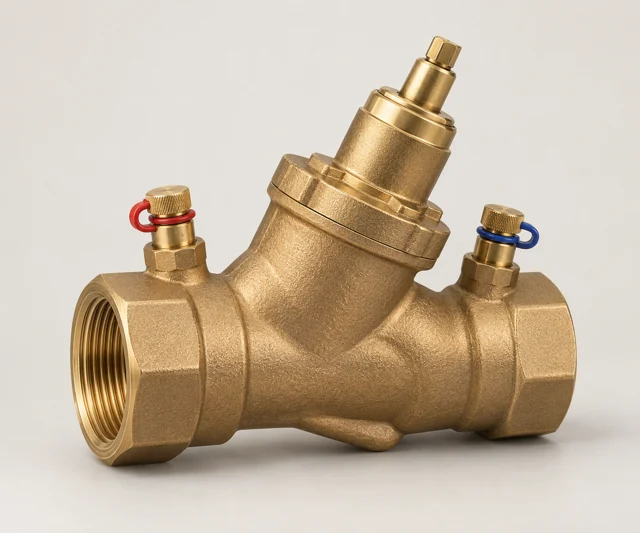
Illustrative Balancing valve body
Generated component illustration. It is not a Zhiren product photograph or an engineering drawing; final geometry follows the controlled drawing.
Illustrative Balancing valve body
Conceptual part illustration
COMPONENT GUIDE

Balancing valve body

Hydronic branch balancing valve

Provides the flow passage, seat location and measuring-port geometry for an OEM balancing-valve design.

Manufacturing & delivery form
Cast body with agreed connection and measuring-port machining.

Flow coefficient and balancing accuracy depend on complete-valve design and calibration. Body and internal parts may use different materials.

Material candidates

EN CC491K Leaded tin-zinc bronze / gunmetal

A candidate for specified water-side valve bodies and housings.

Confirm separately from UNS grades. Lead restrictions, medium, material standard and casting route require approval.

UNS C83600 Leaded red brass

A candidate for specified cast valve bodies, covers and connection housings.

An application candidate, not a confirmed equipment bill of materials or available Zhiren grade. Do not default to potable-water use.

Confirm the drawing, actual duty, material standard and manufacturing condition. Material substitutions require customer approval, and supply scope is agreed after component review.

Component RFQ requirements

Body drawing
Define flow direction, seat profile, wall sections, machining datums and body-to-cover interface.
Measurement ports
Specify pressure-tapping positions, threads, sealing details and inspection datums.
Circuit conditions
Provide actual water chemistry, glycol content, operating pressure, temperature and cycling.
Connections
Confirm end standards, installation envelope and sealing-face requirements.
Verification scope
Allocate dimensional inspection, body leakage checks and complete-valve flow calibration; request material and batch records.

Start with your drawing, specified alloy and quantity. Include the required delivery condition and acceptance records so the manufacturing and inspection scope can be reviewed.

Prepare a component enquiry
FURTHER GUIDANCE

Prepare the technical RFQ.

Alloy reference

Review tin-bronze grades.

Compare reference grades and composition in the alloy catalogue. Use the approved component specification to determine the required alloy and service suitability.

Explore the alloy reference